
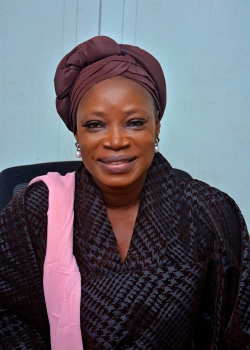
In the dynamic and often challenging world of Nigerian politics, the path to leadership is a test of passion, endurance, sacrifice, and conviction. Many politicians chart their course through personal connections, family legacy, or sheer persistence. But for Adebola Adewunmi Ladigbolu, a lawyer and chieftain of the All Progressives Congress (APC) in Lagos State, her journey into public service is a story of lifelong engagement with leadership, nurtured ambition, strong mentorship, and a deep belief that women must be at the centre of governance if the nation is to truly progress.
In an a brief chat with City People at the swearing-in of newly elected APC members at the party secretariat, Barr. Ladigbolu expressed her concern on why more women are yet to venture into politics.
Today, she serves as the Assistant State Legislative Adviser Representing Ikeja Local Government ll, a position she has used with deliberate purpose to advocate for broader participation of women in politics, enhanced gender equality, and a more inclusive political culture in Nigeria. What makes her story compelling is not only that she holds a political office, but the way she grew into it, with a clear vision of what leadership ought to represent for women and young professionals across the country.
“I am Adebola Adewunmi Ladigbolu, and I am the Assistant State Legal Adviser representing Ikeja Local Government,” she said during the interview, her voice warm but determined. She spoke with the poise of someone who has reflected deeply on her role as a public servant and who understands that her presence in politics goes beyond personal achievement. Born into a family where political engagement was part of everyday conversation, she explained that her decision to enter politics was a natural expression of a lifelong interest in leadership.
“As a legal practitioner, I always wanted to be involved in politics,” she said. “I realized early that the law and public policy are profoundly connected. To make meaningful change for the people I represent, I needed to be where decisions are made.” For Ladigbolu, politics was never an afterthought or a mere career option. It was a calling that began long before any title or role, rooted in her formative years as a student where she first encountered leadership and governance.
In her university days, she was actively involved in Students Union Committees and Departmental Executives and also attends Apex Leaders Meeting. “I was heavily involved in leadership during my time at the university. I had the honour of serving as the State Union Secretary,” she recalled. Even after graduation, her involvement did not wane. During law school, she continued to contribute meaningfully to committees and student legal associations. Those early experiences, she says, shaped her understanding of advocacy, negotiation, and collaborative leadership well before she entered formal politics.
“When I was in law school, I continued to serve on committees. Leadership has always been part of me,” she explained, her voice reflecting both pride and purpose. This long-standing background in leadership gave her a distinct advantage when she began navigating the broader political framework of the APC in Lagos.
Ladigbolu’s entry into active party politics was significantly influenced by her family and mentors, my late political mother, Yeyesewa kemi Nelson and my political father who brought me into Ikeja politics in person of Alhaji Dally Adeokun, former LGA Chairman in ikeja.
“Politics runs in my family,” she noted. “When I told my uncle that I wanted to combine my legal profession with political service, he introduced me to some of the party leaders in Ikeja.” That introduction marked the beginning of a new chapter in her public life. She began attending board meetings, local government programs, campaign rallies, and political gatherings. Her presence was not ceremonial; she participated actively, listened closely, and contributed wherever she could.
Gradually, her visibility within the party grew. “As I attended meetings and became more involved,” she said, “my name began to surface when leadership positions were being considered. When the time came to appoint someone as Assistant Legal Adviser for the local government council, my name was put forward.” Although the role was not exclusively reserved for women, the party leadership felt it was time to place a competent woman in the position. Leaders in Ikeja believed that a woman could bring valuable perspective and fresh energy to the role. This endorsement marked her formal entry into a political office that now positions her to influence legislative direction within the local government.
Ladigbolu’s tenure in politics spans well over a decade. She estimates that she has been actively engaged in political life for more than fifteen years. For many, the sustained commitment from her university years until now demonstrates a rare blend of consistency, resilience, and long-term vision. But behind every rising political figure, there are often mentors and champions who provide guidance, support, and opportunities. For Ladigbolu, two names stand out prominently: Rt. Honourable James Abiodun Faleke, a well-respected political figure in Lagos, and the Chairman of Ikeja Local Government Area 2, Comrade Akeem Olalekan Dauda (fondly known as AKOD).
“Without the guidance of Hon. James Abiodun Faleke and the Chairman Ikeja Local Government, Comrade Akeem Olalekan Dauda, I wouldn’t be where I am today,” she acknowledged with heartfelt gratitude. “They have been my leaders and my pillars of support. I appreciate them so much. Their advice and backing have helped shape my political pathway.”
Her appreciation for these leaders goes beyond mere courtesy; it reflects a political culture where mentorship and alliance-building are essential for advancement. Ladigbolu credits Faleke and the Chairman for guiding her through the intricacies of grassroots mobilization, party dynamics, and public engagement, all critical skills for anyone seeking meaningful impact through political office.
While acknowledging the role of mentors, Ladigbolu is emphatic about the need for structural and cultural changes that support women’s advancement in politics. She believes that Nigeria’s political space must expand opportunities for women not only to participate but to lead decisively. “Women have not been given enough opportunities to show what they can do,” she said. “For many years, leadership in our society has been seen through a male lens. But this is changing, and it must continue to change.”
She believes that political engagement should not be limited by gender. “As women, we need encouragement and real support to participate fully in politics,” she explained. “There must be systems that enable us to occupy higher positions, not just those roles considered ‘available’ for women, but positions that hold real influence and decision-making power.”
When asked what gender equality means to her, she responded without hesitation: “I believe in gender equality. It means that whatever a man can do, a woman can do just as well, maybe even better in some cases.” For Ladigbolu, gender equality is not rhetorical; it is a principle tied to fairness and the belief that leadership potential should never be constrained by gender.
Her advocacy extends beyond politics into social justice, particularly issues affecting the girl child. As a lawyer, she has been involved with a non-governmental organisation that brings people together to address injustices faced by young girls. “There are cases from secondary schools and other communities where girls reach out to us when they face incidents of abuse or injustice. We do our best to support them, investigate the issues, and find ways to assist them,” she said.
Her involvement in humanitarian work reflects a broader understanding of leadership, one that recognizes that political empowerment and social well-being are deeply interconnected. Ladigbolu’s work with the NGO reflects her belief that women and girls must be protected, supported, and given equal opportunities to thrive in every sphere of life.
When asked about her vision for the next ten years, her ambition was clear, bold, and resolute. “I have always aspired to be at the top. I want to be the first woman governor in a legally recognised state in Nigeria,” she declared confidently. “In the next decade, I believe this is achievable, not just for me, but for many women who are ready to lead.”
Her dream is not merely personal. It represents a broader aspiration for women across Nigeria, especially those in the legal and professional community ready to move from advisory roles into leadership positions that shape policy, governance, and public welfare. However, her ambition is tempered by humility and respect for the party structure. “If my leaders, especially my leader Abiodun Faleke, believe a particular path is right for me, I will follow it. I cannot operate behind them. Whatever role they see me taking, whether appointed or contested, I will gladly step into it,” she said.
This response reveals a leader who blends ambition with loyalty and strategic alignment, a quality that political observers believe is critical for long-term success in Nigerian politics. Her approach demonstrates a nuanced understanding that leadership is not only about personal goals but also about collaboration, timing, and collective decision-making.
As Nigeria prepares for future elections and continues its democratic journey, Ladigbolu offers a heartfelt call to women across the country: “We need more women in politics. Not just as token representatives, but as influential leaders who shape policies, drive programs, and inspire others. When women participate in politics and bring their skills and perspectives to the table, our society becomes stronger.”
Her story, beginning with university leadership roles and extending to her current position in local government, illustrates the powerful impact women can have when supported, mentored, and encouraged. It also challenges the political class to create more inclusive spaces where women are not only welcomed but actively empowered.
In the end, Adebola Ladigbolu’s message is clear: women have an indispensable role to play in Nigeria’s political future, and there is no greater time than now for them to step forward. Her journey, marked by dedication, resilience, and a deep belief in gender equality, offers both inspiration and a blueprint for women across the country. With leaders who mentor, platforms that support, and a society ready for change, Nigeria can move toward a more inclusive political landscape where women are visible, vocal, and fully engaged in leadership at every level. As Ladigbolu herself affirms, “Every voice adds value, and it’s time for more women to be heard.”
By Benprince Ezeh
0806859987