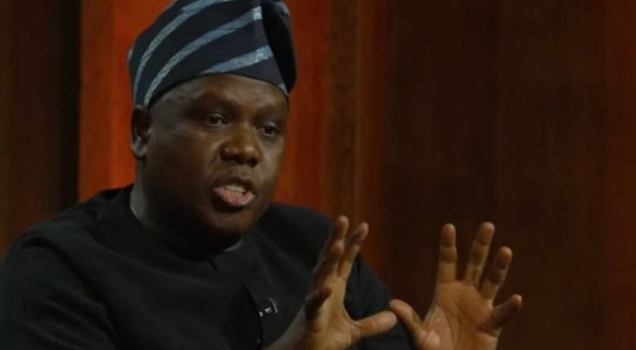
In the theatre of Nigerian politics, there is a recurring character archetype known as the “rented mouth.” These are individuals who build their brand on the scorched-earth criticism of power, only to eventually occupy the very offices they once set ablaze. While this U-turn is a vintage Nigerian political tradition, yesterday’s appearance of presidential spokesman Daniel Bwala on Al Jazeera’s Head to Head moved the phenomenon from the realm of political comedy to institutional tragedy.
What the world witnessed in Bwala’s exchange with Mehdi Hasan was not a debate; it was a forensic autopsy of political credibility. For a nation’s image, the performance was a blunt instrument failure. But for the Nigerian public, it served as a scalpel, exposing the rot of contextual revisionism that now defines the Presidency’s communication strategy.
This shameless behaviour is hardly unique to Bwala. Figures such as Reno Omokri and Femi Fani-Kayode have long occupied a similar space in the country’s political media space. The fundamental flaw in the Bwala, Omokri, and FFK’s playbook is the belief that the digital age respects a memory wipe. Bwala’s repeated defense of “I never said that” or “I am not aware”, even as his own documented press briefings regarding “militias” and “threats of his assassination” were read back to him, represented a puerile attempt at gaslighting.
When Bwala dismissed critics of the administration as “drunken people,” he echoed a specific, historical arrogance. We saw this with Femi Fani-Kayode, who once famously described the APC as “nothing but darkness”, only to later join it and become its most aggressive defender. Similarly, Reno Omokri, who built a digital fortress as Atiku’s wingman and a critic of the “Lagos political model,” has pivoted to a pro-administration stance under a thin veneer of “national interest.”
The evidence suggests a pattern where principles are not North Stars, but commodities. In these instances, the receipts are not just social media memes; they are forensic evidence of a devalued currency of truth.
The shocking nature of Bwala’s performance lies in its tactical incompetence. As a Special Adviser on Policy Communication, his primary role is to build trust. Instead, by choosing flat denial over nuanced “evolution,” he surrendered the moral high ground.
When a spokesman’s pant is removed on a global platform like Al Jazeera, the damage isn’t localized to the individual; it is to the Presidency. It signals to the international community that the Nigerian state is represented by “Information Mercenaries” who lack the discipline to defend a policy without devolving into personal insults or verifiable lies.
This creates what we might call the “Mercenary Marketplace.” By rewarding those who once insulted them, political leaders inadvertently create a perverse incentive structure: to get a seat at the table, one must first be the loudest, most vitriolic critic. This “Anywhere Belle Face” philosophy suggests that integrity is a career liability, while shamelessness is a professional asset.
In the context of Nigeria’s battle with digital disinformation and deepfakes, the “Bwala Strategy” is a national security risk. When government spokespeople treat facts as plastic, they provide the ultimate cover for purveyors of fake news. If the public cannot trust their eyes and ears when watching a documented video of a spokesman, they will certainly not trust the government when it attempts to debunk a real deepfake or a malicious rumor.
The fallout of the Mehdi Hasan interview is not just a bad day at the office for Daniel Bwala. It is a diagnostic report on the death of shame in our political discourse. The “receipts” provided by the digital era have rendered the old tactics of denial obsolete.
Nigeria cannot afford rented mouths in an era that demands trusted voices. To stab at the heart of this mercenary culture, the Nigerian public and the media must stop treating these pivots as entertainment and start treating them as disqualifying character flaws.
The Presidency is not a rehabilitation center for political turncoats, nor is it a theatre for the professionalization of shamelessness. Until we demand that our spokespeople own their past or pay the price for their inconsistency, our national narrative will remain a hostage to the highest bidder. The Al Jazeera interview was a mirror; if we don’t like what we see, we must stop hiring the actors who keep putting on the masks.
𝙔𝙤𝙪𝙣𝙜 𝙊𝙯𝙤𝙜𝙬𝙪 𝙬𝙧𝙞𝙩𝙚s 𝙛𝙧𝙤𝙢 𝘼𝙗𝙪𝙟𝙖