
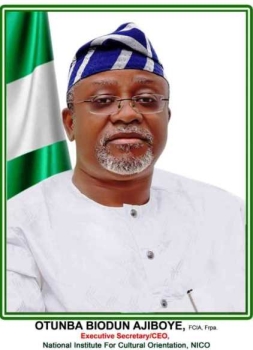

A chieftain of the All Progressives Congress (APC) and Executive Secretary/Chief Executive Officer of the National Institute for Cultural Orientation (NICO), Otunba Biodun Ajiboye, has launched a scathing criticism of leading opposition figures, accusing them of contributing to the decline of Nigeria’s democratic culture through what he described as ineffective opposition politics.
Ajiboye, in a statement issued on Sunday, specifically mentioned the presidential candidates of the Labour Party and the Peoples Democratic Party in the 2023 general elections, and , arguing that their inability to build strong and stable political structures has weakened the country’s democratic process.
According to him, democracy goes beyond periodic elections, stressing that it depends on strong institutions, accountable leadership and a credible opposition capable of challenging government policies while presenting workable alternatives.
Ajiboye argued that as the two leading opposition figures that emerged from the 2023 presidential contest, Obi and Atiku were expected to provide a strong democratic counterbalance to the ruling party but, in his view, failed to establish the level of institutional opposition required to deepen democratic accountability.
He attributed the challenges facing their respective political platforms to internal disputes, leadership struggles and organisational weaknesses, adding that leaders who struggle to effectively manage political parties may face greater difficulties managing the complexities of governing a country as diverse as Nigeria.
The APC chieftain further accused opposition parties of focusing more on criticism of government actions without providing comprehensive policy alternatives that could contribute meaningfully to national development.
“Democracy is strengthened when opposition parties engage government constructively, challenge policies with facts and offer solutions that improve governance,” he said.
Ajiboye described the weakening of opposition parties as a serious concern for Nigeria’s democratic growth, warning that the absence of a strong and organised opposition reduces accountability and limits healthy political competition.
He said the renewed search for political coalitions among opposition leaders was an indication that existing political structures had not been sufficiently strengthened to provide effective platforms for democratic engagement.
On national security, the NICO boss called for deeper conversations around reforms, including state policing, stressing that Nigeria’s security challenges require innovative approaches and open-minded debate rather than resistance to proposed solutions.
Ajiboye urged Nigerians to judge future political leaders by their ability to build enduring institutions, promote internal democracy, unite diverse interests and place national development above personal political ambitions.
He called on all political actors to recommit themselves to strengthening Nigeria’s democratic institutions, saying a vibrant democracy requires responsible participation from both government and opposition forces.
