
2025 was an eventful year in Nigeria. It was a year filled with notable political events that shook the entire country.
As 2025 rounds up, WITHIN NIGERIA reviews events, majorly political ones, that shaped the country and defined its trajectory.
These events rewrote the rules of Nigerian politics and consolidated public engagements about reshaping power, testing institutions, and redrawing the map for 2027.
Here is a list of selected events that shaped the year 2025:
Rivers State Emergency Rule
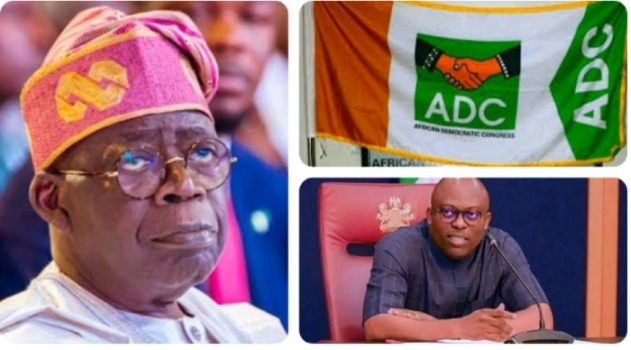
President Bola Tinubu on March 18 declared a state of emergency in Rivers State. He cited a total paralysis of governance after months of political deadlock between Governor Siminalayi Fubara and the State House of Assembly.
Tinubu, who claimed to have invoked Section 305 of the 1999 constitution, suspended the governor, his deputy, and all elected assembly members for six months.
According to Tinubu, the suspension was a response to pipeline vandalism, security threats, the demolition of the state assembly building, and others. He appointed a retired Vice Admiral, Ibok-Ete Ibas, as a Sole Administrator to run the state, with powers to issue regulations (subject to Federal Executive Council approval) but not permitted to make new laws.
The emergency ended on 17 September 2025—exactly six months later—with Tinubu announcing the reinstatement of Governor Fubara, his deputy, and the entire legislature, effective 18 September 2025.
Supreme Court grants LG autonomy
The Supreme Court on July 11, 2024, ruled that Nigeria’s 774 local governments must receive their statutory allocations directly from the Federation Account.
The court also declared state governors’ practice of holding or disbursing LG funds unconstitutional and ordered immediate compliance. It also barred states from appointing caretaker committees, insisting only democratically elected councils are valid.
The judgment affirmed LGs’ financial autonomy but left administrative independence incomplete, sparking calls for constitutional reform to fully empower grassroots governance.
ADC Emerges as “Third Force”
Opposition figures like Atiku Abubakar, Peter Obi, Nasir El-Rufai, David Mark, and Rauf Aregbesola, among others, joined the Africa Democratic Congress (ADC) in mid-2025.
The ADC positioned itself as a unified ‘third force’ to break the two-party monopoly, aiming to become a serious challenger to the APC and PDP ahead of 2027.
Suspension of Senator Natasha Akpoti‑Uduaghan
She was suspended for six months on March 6, 2025, after a heated floor dispute over her seat assignment.
The Senate Ethics Committee found her guilty of “misconduct” and recommended the suspension, which was approved by a majority vote. Her salary, allowances, and security were withdrawn, and she was barred from the National Assembly premises.
A court injunction had tried to block the disciplinary process, but the Senate ignored it and proceeded anyway. The suspension ran until early September 2025, after which she could return, though she later faced contempt penalties and ongoing legal battles over her reinstatement.
Death of former President Muhammad Buhari
He passed away on Sunday, July 13, 2025, at age 82 in a London clinic after a prolonged illness (pneumonia). President Bola Tinubu ordered that flags should be flown at half-mast, a seven-day mourning period, and a state funeral. He was buried in Daura, Katsina, with full military honors.
Presidential pardons
President Bola Tinubu on October 10, 2025, granted presidential pardon and clemency to 175 convicted persons, including high-profile names like Herbert Macaulay, Ken Saro-Wiwa, Major-General Mamman Vasta, and Maryam Sanda, including drug offenders, fraudsters, and illegal miners.
Some offenders also got reduced sentencing, such as life sentences cut to 10–12 years, 15‑year terms reduced to 7–8 years, and drug‑offense sentences trimmed by 1–3 years.
Tinubu revised the list in late October 2025, removing those convicted of serious crimes like kidnapping, armed robbery, and violent offenses, while keeping some drug offenders and reducing sentences for others.
Alleged coup plot & military shake‑up
Nigerian intelligence in late September 2025 allegedly uncovered a suspected plot by 16 senior military officers (from captain to brigadier general) to overthrow President Bola Tinubu during the October 1 Independence Day parade.
The plot allegedly involved assassinating top officials and installing a military government. The Defense Intelligence Agency (DIA) arrested the officers, and the government canceled the parade* for security reasons.
In response, Tinubu ordered a major military reshuffle on 24 October 2025, removing the Chief of Defence Staff and all service chiefs—replacing them with new appointees, including Major‑General Waidi Shaibu as Army Chief, Air Vice Marshal Sunday Aneke as Air Force Chief, and Rear Admiral Idi Abbas as Naval Chief.
The military later redeployed 60 major generals and 11 brigadier generals across formations to tighten command control.
While the government denied a coup, insiders confirmed the arrests were linked to the plot, and over 30 suspects now face trial.
New INEC leadership
President Bola Tinubu in early December 2025 nominated Prof. Josh Ojo Amupitan (SAN) as the new INEC chairman.
The National Council of State unanimously approved Amupitan’s nomination in October 2025, and his name went to the Senate for confirmation—which followed shortly after.
Amupitan, a 58‑year‑old law professor from Kogi State, brings a background in corporate law, electoral governance, and academic leadership.
U.S. airstrikes on ISIS targets in Sokoto
President Donald Trump on Christmas Day, 2025, ordered U.S. Tomahawk missiles hit two ISIS-linked camps in Sokoto State—part of the Islamic State Sahel Province (ISSP) and its local ally Lakurawa.
The strike, coordinated with Nigeria’s government, involved 16 precision-guided munitions launched from a Navy destroyer and Reaper drones, targeting camps in the Bauni forest and Tangaza area.
Nnamdi Kanu
Justice James Omotosho of the Federal High Court in Abuja on November 20, 2025, convicted Nnamdi Kanu, leader of the banned Indigenous People of Biafra (IPOB), on all seven terrorism‑related charges.
He was sentenced to life imprisonment—the judge opted for life instead of the death penalty, which the prosecution had requested. He received additional concurrent sentences—20 years on one count and 5 years on another—and was ordered to be held in protective custody away from Kuje prison.
Politicians, including governors, senators, lawmakers, and local officials from opposition parties, especially the PDP, to the ruling All Progressives Congress (APC).
At least six PDP governors, senators, and federal lawmakers and 24 out of 26 PDP lawmakers in the Akwa Ibom Assembly defected to the All Progressives Congress.